


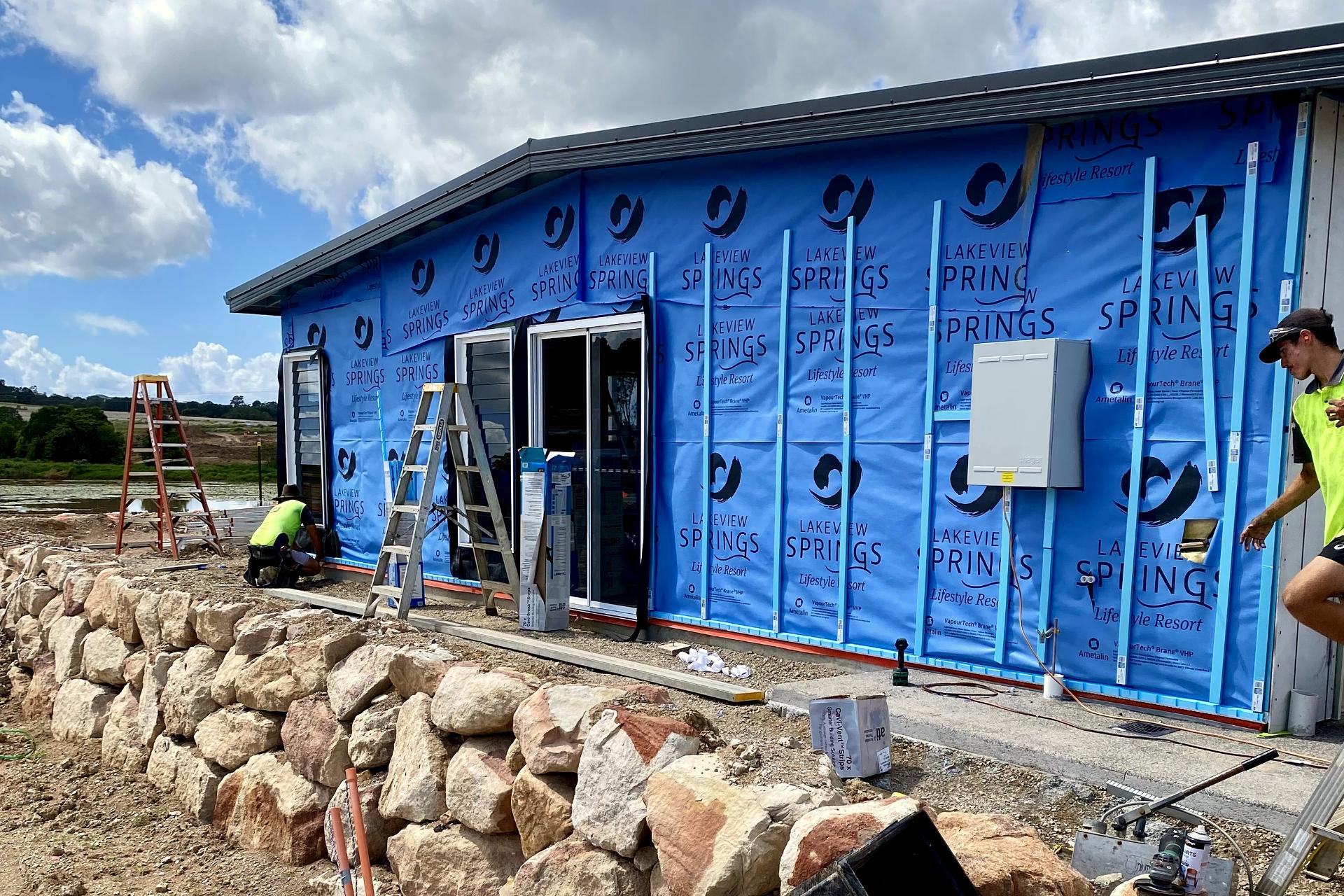
Cavity wall insulation is only half the conversation
If you’re researching cavity wall insulation in Australia, you’re asking the right question. But the full answer is broader than most people expect.
The insulation batts inside the wall matter. But what happens in the cavity between the frame and the cladding matters just as much — and it’s the part that most builders, designers, and homeowners overlook until something goes wrong.
This guide covers the whole picture: what cavity wall insulation is, how Australian climate zones affect your choices, what the NCC requires in 2026, and why the thermal break and cavity ventilation system you choose can make or break the performance of your wall assembly.
What is cavity wall insulation?
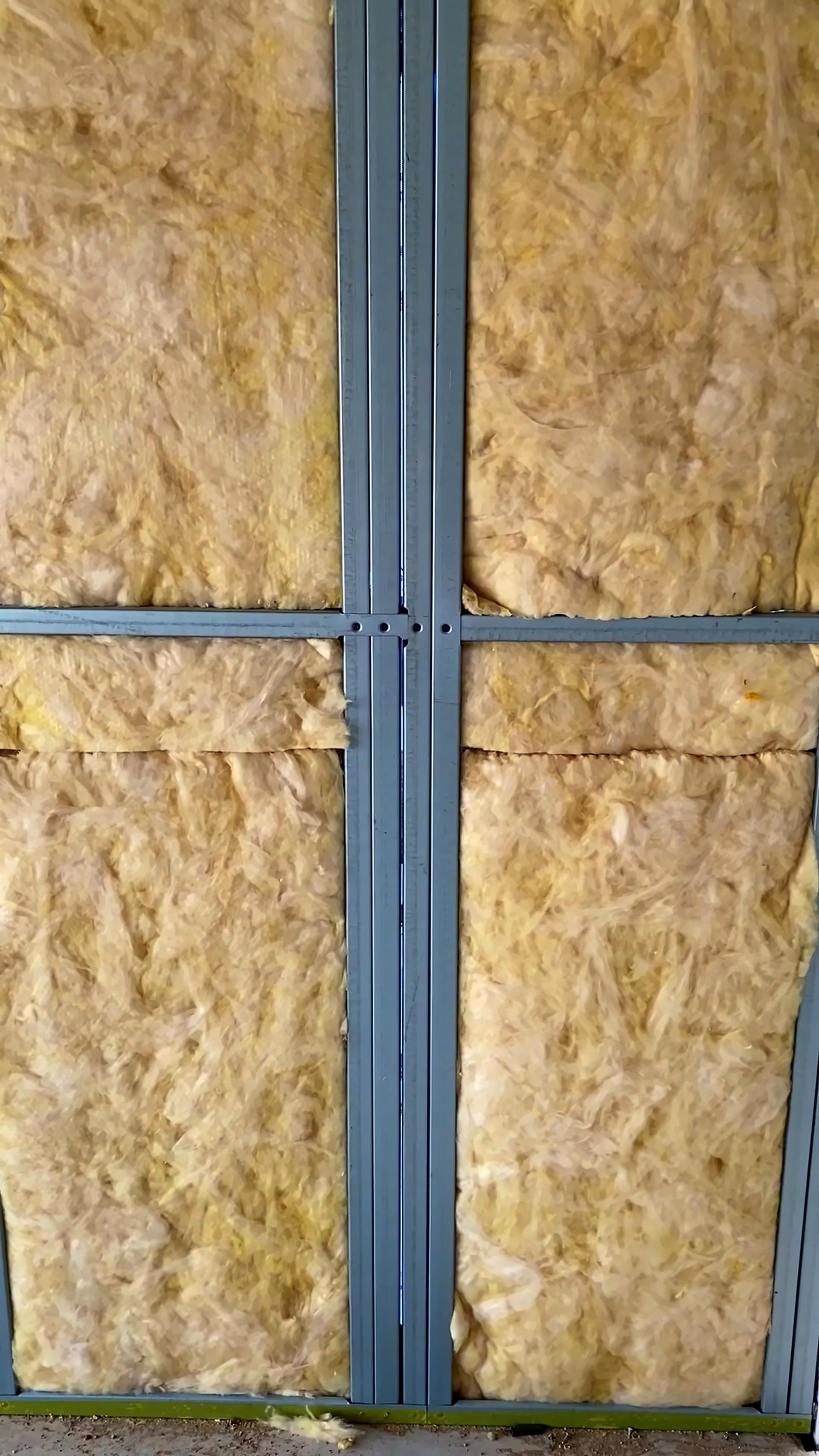
In Australian residential construction, cavity wall insulation typically refers to the insulation batts installed between the structural frame members (studs) inside the wall. In a standard wall, this is the main thermal barrier between inside and outside.
But a wall assembly has multiple layers, and each one contributes to the Total Wall R Value — the true measure of thermal performance. The frame, the insulation, the air gaps, the cladding, and critically, the thermal break between the frame and the cladding all play a role.
When people talk about ‘cavity wall insulation,’ they’re usually talking about the batts. But the cavity itself — the gap behind the cladding — is where thermal bridging, condensation, and long-term wall health are determined.
What does the NCC require in 2026?
For houses (Class 1 buildings), energy efficiency requirements live in NCC Volume Two — Part H6 Energy Efficiency and the Housing Provisions Part 13. The critical number for wall insulation is Total Wall R Value — not just the batt R-value on its own.
NCC 2025 has also introduced mandatory 12mm min. cavities behind all external cladding, with minimum ventilation rates and requirements for completely clear cavitiesin climate zones 6, 7, and 8, which also need to be drained and ventilated..
The condensation management provisions in NCC Volume Two -Part H4 and Housing Provisions Part 10.8 work alongside the energy efficiency requirements. Energy efficiency and condensation management need to work together — one without the other creates problems.
How Australian climate zones affect your wall insulation
The NCC divides Australia into eight climate zones, each with different Total Wall R Value requirements. The further south you build, the more stringent the thermal performance requirements.
Climate zones 1–3 (tropical and subtropical): Moderate wall insulation requirements, but condensation from air conditioning is an increasing concern. When the air conditioning runs for much of the year, the internal linings become the cold surface where condensation can occur — the reverse of what happens in cold climates.
Climate zones 4–5 (temperate): Higher wall R-value requirements. Thermal bridging through steel frames becomes more significant as the temperature differential between inside and outside increases.
Climate zones 6–8 (cool to alpine): The most stringent requirements. These zones cover large parts of New South Wales, Victoria, South Australia, all of Tasmania, and parts of southern Western Australia. Drained and ventilated cavities are mandatory. Condensation management is critical.
The thermal break you choose affects Total Wall R Value across every climate zone. A higher-performing thermal break can let you use less expensive batts while achieving the same or better wall performance.
The real cost of cavity wall insulation
When builders and homeowners compare insulation costs, they usually compare batt prices per square metre. But the true cost of a wall insulation system includes the thermal break, the batts, the installation labour, and the long-term cost of getting it wrong.

Multiply that saving across a standard home, then across 30 or 50 homes a year, and the numbers become significant. Or keep the R2.7 batts and use the higher thermal break R-value to reduce ceiling insulation, improve glazing options, or deliver a higher star rating to your client.
Why the cavity matters more than the batts
This is the part most people miss. The cavity behind the cladding — the space where the thermal break sits — determines whether moisture can drain away and whether air can circulate to dry out the wall assembly.
A sealed cavity traps moisture. Warm humid air condenses on cooler surfaces, and with nowhere to go, it accumulates. The consequences are structural damage, mould growth, ghosting on external walls, and ultimately a building defect that sits silently behind the cladding until it’s too late.
A drained and ventilated cavity allows moisture to escape downward and air to circulate. This is the approach recommended by building scientists and increasingly mandated by the NCC. The thermal break creates this cavity — so the product you choose doesn’t just affect thermal performance. It determines whether your wall can manage moisture for the life of the building.
What to look for in a cavity wall insulation system
Total Wall R Value, not just batt R-value. Model the full assembly. A higher-performing thermal break can let you use cheaper batts while achieving the same wall performance.
A genuine drained and ventilated cavity. 20mm depth gives real space for drainage and airflow. 12mm technically meets the new NCC minimum but leaves no tolerance for construction reality.
Materials that last. The thermal break sits inside the wall for decades. It needs to be waterproof, pest-resistant, mould-resistant, and dimensionally stable. XPS ticks all of these. Timber doesn’t.
Documentation and traceability. With up to seven years of liability, you want products with batch tracking, independent test data, and installation verification you can point to if a wall is ever questioned.
ATI’s Cavi-Break® and Cavi-Vent® — the thermal break and cavity system designed for Australian conditions.
R-value of 0.58 (3x NCC minimum). 20mm XPS construction creating a drained and ventilated cavity. Self-adhesive application. Integrated ventilation channels with Cavi-Vent. 10-year warranty. 100% recyclable.
Builders like OJ Pippin Homes, RAW Design & Construct, Alroe Constructions, and Philip Usher Constructions have adopted the system for faster installation, lower project costs, and long-term confidence in wall performance.
Your next step
Use ATI’s free Total Wall R-Value Comparison tool to model your current wall assembly against an optimised specification. See exactly where you stand — and where the savings are.
Or request a sample from ATI and try it on your next project. Peel one strip, stick it to a stud, and decide for yourself.
Australian Thermal Industries manufactures Cavi-Break® and Cavi-Vent® — high-performance thermal break and cavity ventilation systems for Australian residential and light commercial construction. 10-year warranty. 100% recyclable. Independently tested.
#CavityWallInsulation #NCC2025 #BuildingEnvelope #ThermalBreak #AustralianBuilding #CaviBreak #CondensationManagement
