.jpg)
.jpg)
.jpg)

ATI Cavi-Vent®
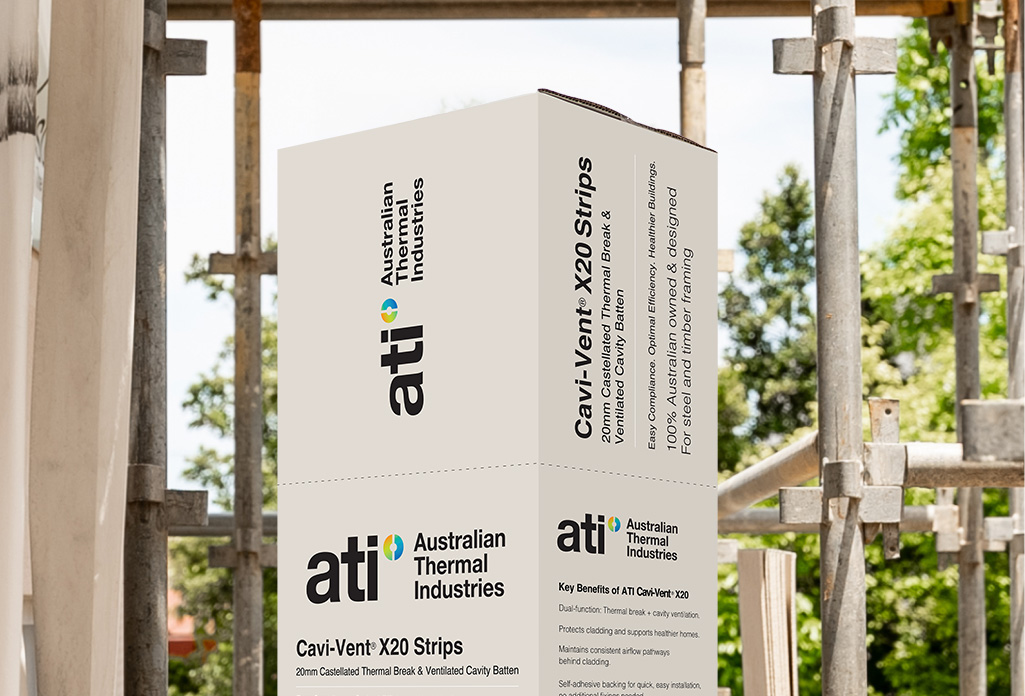
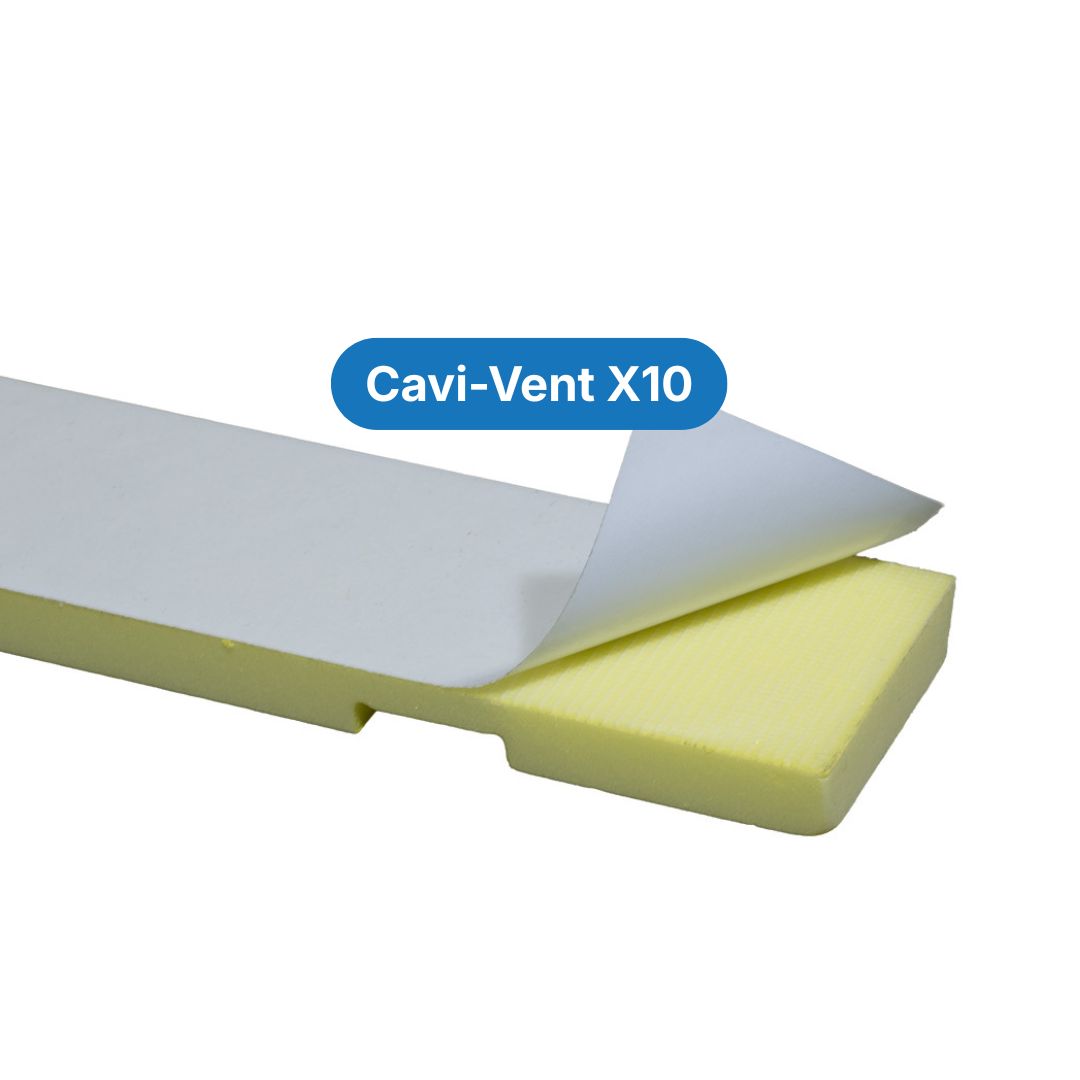
Cavi-Vent is a ventilated thermal break that creates a drained and ventilated cavity behind cladding while maintaining continuous thermal separation. With NCC 2025 introducing a mandatory 12mm drained and ventilated cavity in Climate Zones 6, 7 and 8, Cavi-Vent gives builders a simple, proven way to comply from day one. Manufactured from the same high-density XPS as Cavi-Break, Cavi-Vent incorporates a tapered top edge and castellated outer face to support airflow and drainage within the cavity.
- Creates a drained and ventilated cavity behind cladding in a single product, no additional components required.
- Tapered top edge and castellated outer face support airflow and drainage.
- Supports condensation management without complex detailing or site workarounds.
- Independently tested thermal performance from R0.28 (X10) to R0.90 (X35).
- Directly supports NCC Part 10.8 condensation management provisions, including the 12mm cavity requirement under NCC 2025.
- Designed to benefit both steel and timber framing.
- Part of a complete wall system when paired with Cavi-Break for combined thermal break and condensation management.

Technical information

All ATI Cavi-Break and Cavi-Vent products are manufactured from XPS that does not absorb moisture, rot, swell or twist. Once installed, they maintain thermal separation and cavity depth passively with no maintenance required. Minimum 50-year lifespan.
Major cladding manufacturers recommend or require a defined cavity behind their products to support drainage and ventilation. Cavi-Break and Cavi-Vent create that cavity depth while providing thermal separation at the framing interface, making it easier to align with cladding manufacturer installation requirements and support warranty conditions.
All ATI wall products are compatible with both steel and timber framing across residential and commercial wall assemblies. For steel-framed construction, they outperform the NCC thermal break requirement. For timber-framed construction, they create a defined cavity that supports condensation management as standards continue to tighten.
Cavi-Break and Cavi-Vent are supplied in 1,200mm lengths to align with standard framing layouts without cutting in most applications. Reduces waste on site and cuts to length with standard hand tools where needed.
All ATI wall products feature self-adhesive backing that holds the strip in place over the wall wrap or membrane while cladding is fixed through into framing as normal. No power tools, no extra fixings, straightforward enough for a single installer.
Cavi-Break and Cavi-Vent are manufactured from high-density extruded polystyrene (XPS) with high compressive strength to resist deformation under cladding loads. Maintaining dimensional stability is critical for two reasons: it keeps cladding lines straight and preserves the defined cavity depth over the service life of the building. Unlike lower-density foam products, they do not compress or creep under sustained load.
NCC Part 13.2.5 requires a minimum R0.2 thermal break between steel framing and external cladding in steel-framed construction. Independent test data referenced to AS/NZS 4859.1 is available to support compliance documentation and Energy Efficiency Aspect certification.
Cavi-Break and Cavi-Vent are each available in four independently tested R-values: R0.28 (X10), R0.32 (X12), R0.58 (X20) and R0.90 (X35). All variants outperform the NCC Part 13.2.5 minimum thermal break requirement of R0.2 for steel-framed construction, starting at 40% above the minimum. Higher R-values contribute more significantly to Total Wall R-Value, supporting stronger energy efficiency outcomes without increasing wall depth.
Cavi-Vent is not a substitute for vapour control or membrane strategy. Vapour control requirements remain dependent on climate zone, building use and overall wall design under NCC and AS 4200.2. Cavi-Vent works alongside membrane and vapour control elements in the wall assembly, contributing to a complete moisture management strategy rather than replacing any single component of it.
Demonstrating condensation management and thermal performance requires documentation, including the Energy Efficiency Aspect Certificate (Form 43). A defined drained and ventilated cavity system using Cavi-Vent helps demonstrate that both cavity depth and thermal bridging have been addressed within the wall build-up.
Cavi-Vent is designed for horizontal installation across framing, which keeps the castellated drainage channels unobstructed along the full length of the wall. When used alongside Cavi-Break applied vertically over studs, the two products form a complete cavity system that addresses both thermal bridging and condensation management.
NCC 2025 introduces a mandatory 12mm minimum drained and ventilated cavity in Climate Zones 6, 7 and 8, with Victoria adopting from 1 May 2026 and other states expected to follow. This requirement applies to both steel and timber framed construction. Cavi-Vent X12 has been developed specifically to meet this requirement, delivering a consistent 12mm cavity with tested thermal performance of R0.32. It is engineered for both vertical and horizontal application.
NCC Part 10.8 sets out condensation management requirements for wall assemblies. Cavi-Vent directly supports these provisions by creating a drained and ventilated cavity that allows moisture movement behind cladding. Importantly, the NCC Explanatory Notes to Part 10.8 acknowledge that full code compliance alone may not prevent condensation in all circumstances. A defined drained and ventilated cavity provides an additional layer of moisture management beyond minimum requirements.
Cavi-Vent's geometry is specifically engineered to support drainage and airflow within the cavity. The castellated outer face provides continuous vertical channels for moisture to drain downward and out at the base of the wall, while the tapered top edge supports airflow entry without creating an unobstructed gap. This defined geometry removes the variability associated with improvised cavity solutions and ensures consistent performance across the wall.
A drained and ventilated cavity is a defined air space behind cladding that allows moisture to drain out and air to circulate, reducing the risk of condensation and moisture damage within the wall assembly. Major cladding manufacturers strongly recommend drained and ventilated cavities behind their products, and NCC 2025 introduces a minimum 12mm requirement in Climate Zones 6, 7 and 8 with Victoria adopting from 1 May 2026 and other states expected to follow. Cavi-Vent creates that cavity while simultaneously providing thermal separation at the framing interface.
Relevant downloads


Product benefits

.webp)
Cavi-Vent installs horizontally across framing with self-adhesive backing, no power tools, no extra fixings. The defined profile and continuous drainage channels remove the guesswork of site-cut timber battens, and strips are supplied in 1,200mm lengths for easy handling. A single installer can complete the job, typically at least 30 per cent faster than traditional batten methods, apprentice included.
Cavi-Vent aligns with NCC Part 10.8 condensation management provisions and supports the 12mm minimum drained and ventilated cavity requirement introduced under NCC 2025 for Climate Zones 6, 7 and 8. Every variant is independently tested to Australian standards with full documentation to support compliance.
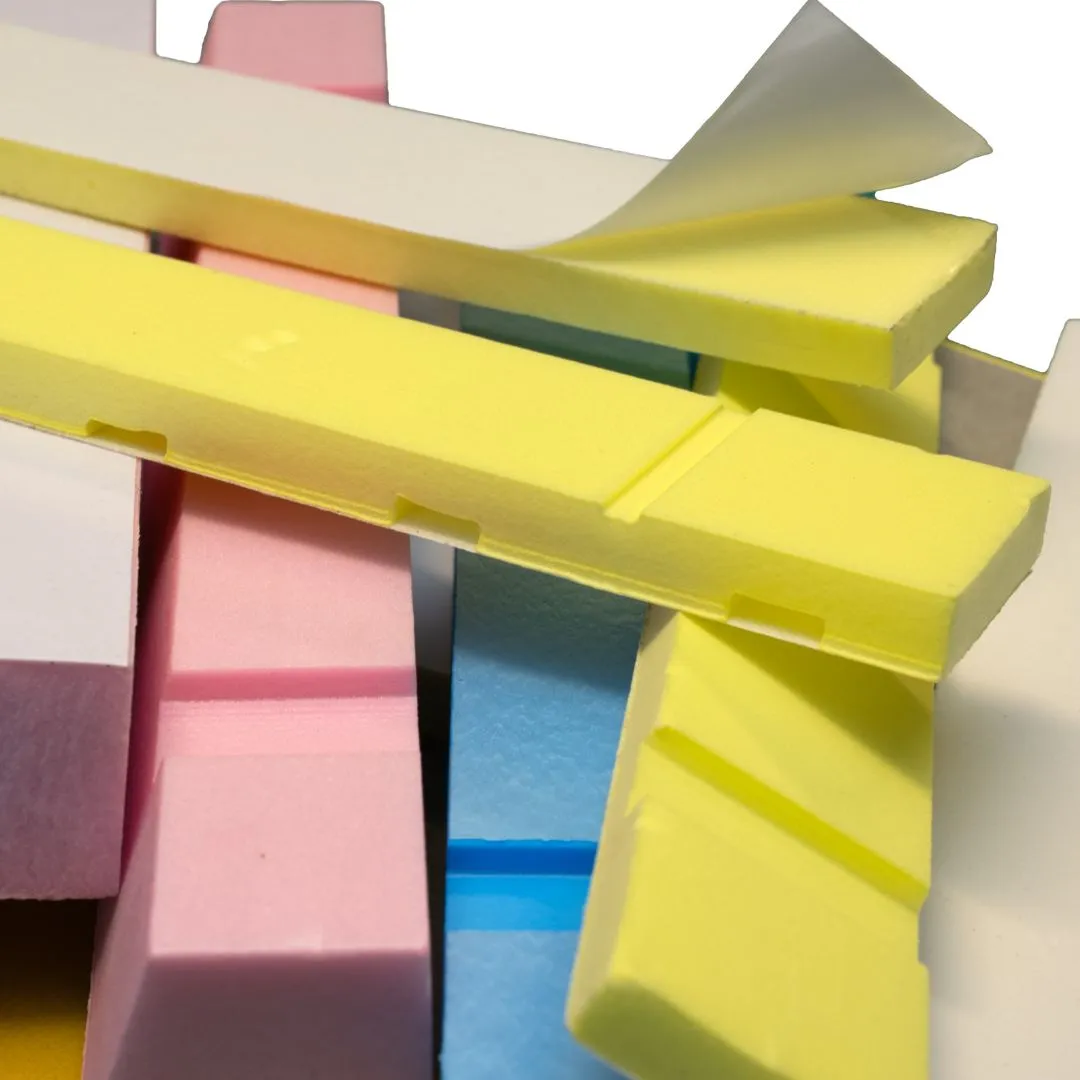
Cavi-Vent is available in multiple thicknesses so cavity depth and thermal performance can be matched to the wall build-up. The X12 variant delivers a consistent 12mm drained and ventilated cavity to meet the NCC 2025 requirement in Climate Zones 6, 7 and 8.

Cavi-Vent delivers thermal separation and condensation management in a single product, maintaining tested R-values from R0.28 to R0.90 across all variants. Its high compressive strength XPS construction holds cavity geometry and ventilation pathways under load across the life of the building. That means drier walls, healthier homes and fewer callbacks long after handover.


Frequently asked questions
Yes. Both products are compatible with steel and timber framing across residential and commercial applications. On steel frames they provide thermal break performance to exceed NCC requirements. On timber frames they create a defined cavity for condensation management.
Yes. Cavi-Vent aligns with NCC Part 10.8 condensation management provisions and supports the NCC 2025 requirement for a 12mm minimum drained and ventilated cavity vented top and bottom. It also goes beyond minimum code requirements, as the NCC Explanatory Notes to Part 10.8 acknowledge that full compliance alone may not prevent condensation in all circumstances. A drained and ventilated cavity provides an additional layer of moisture management.
No. Vapour control strategy remains dependent on climate zone, building use and overall wall design under NCC and AS 4200.2 requirements. Cavi-Vent works alongside, not instead of, membrane and vapour control elements in the wall assembly.
Yes. Several major cladding manufacturers recommend or require a drained and ventilated cavity behind their products, and some limit warranty coverage for condensation and mould damage where no cavity is provided. Cavi-Vent helps builders meet those conditions, reducing the risk of warranty disputes and callbacks well after handover.
Yes. All ATI Cavi-Break and Cavi-Vent products are manufactured from high-density XPS that does not absorb moisture, rot, swell or twist. Each product is designed with a minimum 50-year lifespan. Once installed, they work passively with no maintenance required.
In most wall systems, yes. Cavi-Break is applied vertically over studs to provide continuous thermal separation, while Cavi-Vent is applied horizontally to form a drained and ventilated cavity behind cladding. Used together, they deliver a complete wall system without requiring additional components or complex detailing.
Condensation management and thermal performance must be demonstrated through documentation, including the Energy Efficiency Aspect Certificate (Form 43). A defined thermal break and drained cavity system makes it easier to demonstrate compliance at handover.
No. Strips are supplied in easy to handle lengths that align with typical framing layouts. The self-adhesive backing holds the strip in place while cladding is fixed through it. No H3 treated timber, no treating of cut ends, no pre-fixing battens. Installation is typically at least 30 per cent faster and straightforward enough for a single installer, apprentice included.
Cavi-Vent serves two functions in the wall assembly. It provides thermal separation at the framing interface and creates a defined drained and ventilated cavity behind cladding. Its tapered top edge and castellated outer face allow moisture to drain and air to move freely behind the cladding, which is what major cladding manufacturers recommend and what NCC condensation provisions require.
Cavi-Vent X12 delivers a consistent 12mm drained and ventilated cavity with tested thermal performance of R0.32. NCC 2025 introduces a 12mm minimum drained and ventilated cavity requirement in Climate Zones 6, 7 and 8, with Victoria adopting from 1 May 2026 and other states expected to follow. The X12 is engineered for both vertical and horizontal application, simplifying detailing where that cavity depth is required.
Both Cavi-Break and Cavi-Vent are available in four tested configurations: X10 (R0.28), X12 (R0.32), X20 (R0.58) and X35 (R0.90). For Cavi-Vent, the X12 variant is specifically relevant where a defined 12mm drained and ventilated cavity is required under NCC 2025 in Climate Zones 6, 7 and 8. For Joist-Break Ultra, two variants are available: Ultra10 and Ultra20.
Product brochures and installation guidance are available in the Resources section. For specifiers requiring tested R-value data, compliance documentation or energy modelling notes, a Specifier Pack is available upon request.
All ATI products are available through ATI's reseller and stockist network. Find your nearest stockist on the Where to Buy page, or contact ATI directly if you need help identifying the right supplier for your project.
No. Both Cavi-Break and Cavi-Vent are manufactured from high compressive strength XPS engineered to resist deformation under typical lightweight cladding loads. Dimensional stability is maintained across the service life of the building, preserving cavity geometry and straight cladding lines.